
 admin
admin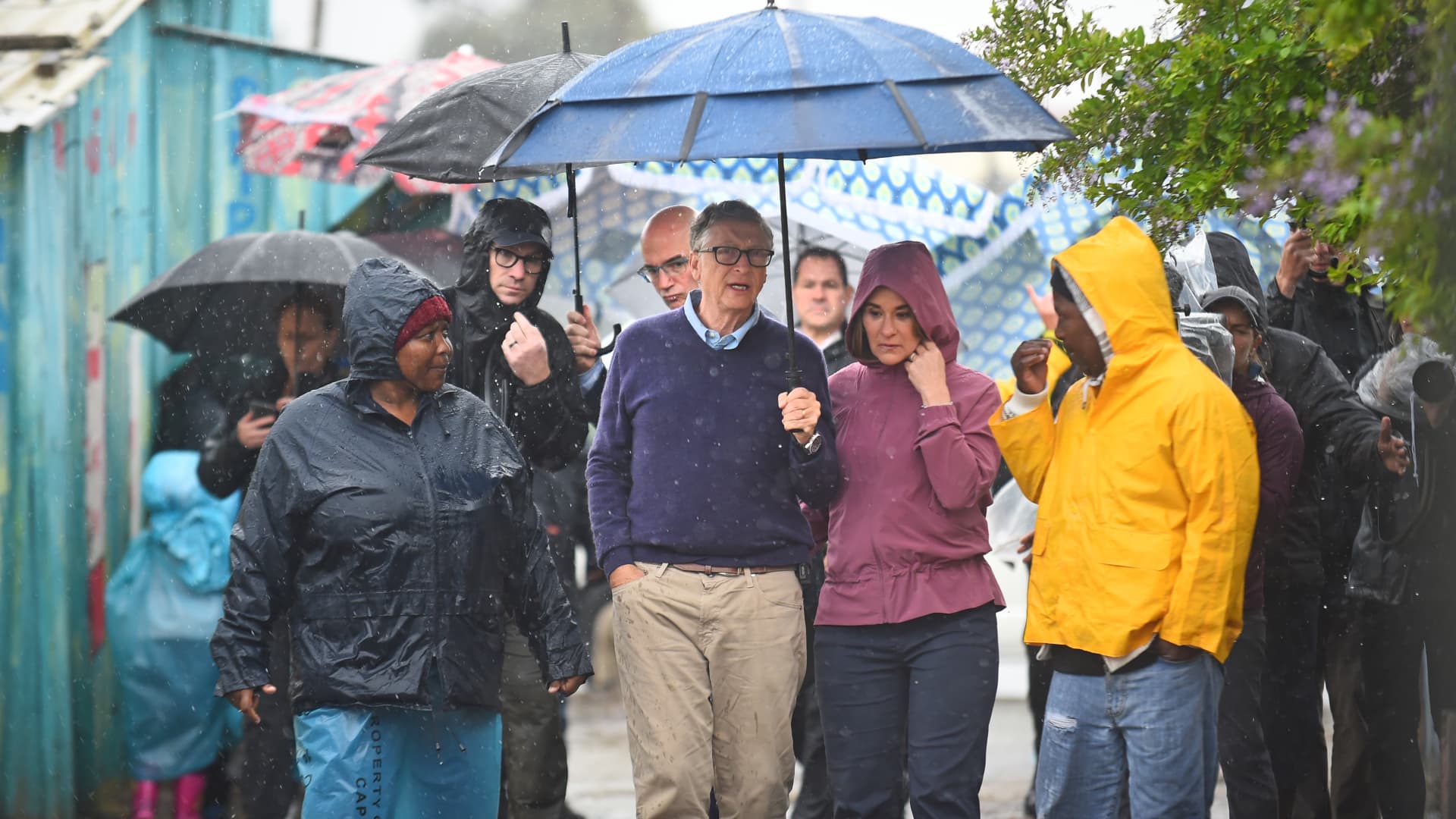
Bill and Melinda Gates brace the rain as they visit the township of Khayelitsha on October 25, 2019 in Cape Town, South Africa.
Brenton Geach | Gallo Images | Getty Images
A version of this article first appeared in CNBC’s Inside Wealth newsletter with Robert Frank, a weekly guide to the high-net-worth investor and consumer. Sign up to receive future editions, straight to your inbox.
While donations to charity have been rising, the pool of donors is shrinking, as philanthropy becomes hyper concentrated among a small group of ultra-wealthy mega-donors, according to a new study.
A new report from Altrata finds that ultra-high-net-worth individuals (those worth $30 million or more) now account for 38% of all individual giving in the world. Put another way, 400,000 people account for more than a third of the world’s charity.
It’s even more extreme when you look at billionaires. The world’s 3,200 billionaires (who account for 0.00004% of the global population) account for 8% of individual philanthropy.
The giving by those at the top is, of course, a positive. While it’s worthy to debate whether the wealthy are giving enough (see the recent annual letter from Gates Foundation CEO Mark Suzman on how the wealthy need to step it up), giving on the whole continues to grow.
The overall level of giving from ultra-high-net-worth individuals in 2022 was 25% higher than it was in 2018, even though 2022 was a down year for financial markets, according to Altrata. North Americans remain the most philanthropic on the planet, accounting for nearly half of global giving from that upper echelon.
The challenge for wealth advisors and nonprofits is adapting to a new, highly top-heavy landscape for philanthropy. Nonprofits, which for years benefitted from a broad range of donors, now have to depend on a smaller collection of super-donors, who are already barraged with requests. Charitable causes will rise and fall depending on the interests and goals of a small group of mega-funders. And overall giving will become more volatile, since the benevolence of billionaires and the ultra-wealthy is driven in large part by stock prices.
Amir Pasic, dean of the Indiana University Lilly Family School of Philanthropy, says the so-called “dollars up, donors down” phenomena has caused nonprofits to rethink their fundraising and strategies.
“A lot of nonprofits are pivoting to focus more on those major gifts and trying to figure out how to access wealthy donors and foundations,” he said.
At the same time, he said, some nonprofits are trying to turn the tide of wealth and use technology and more creative outreach programs to tap a larger community of smaller, younger donors.
“It’s a Catch-22,” he said. “Everybody is rushing to the top of the pyramid, but it’s becoming so concentrated they may be neglecting the importance of reaching out to tomorrow’s donors.”
According to Altrata, today’s ultra-wealthy mega-donors are largely male, with a majority over the age of 70 and with a higher share of liquid wealth (i.e., cash) than the broader ultra-high-net worth population. Women, however, are a rising force. While women account for 11% of the ultra-high-net-worth population, they account for 22% of the larger givers, according to the study.
Today’s ultra-wealthy donors also prefer to give through private foundations and donor-advised funds — which give them more control — rather than simply writing checks to the Red Cross or United Way. The assets held in private foundations have more than doubled since 2005, to more than $1.2 trillion, according to Federal Reserve data.
Almost one in five of all ultra-high-net-worth individuals has a private foundation, and 30% of those worth $100 million or more have a foundation, according to Altrata.
The giving priorities of the wealthy are also different from those of the broader public, which could lead to more money flowing to causes that are particular to the wealthy or even a subset of a few individuals. The top charitable cause for ultra-wealthy donors was education (at 54%), according to Altrata. That was followed by arts and culture (32%), health care and medical research (28%), social services (23%) and the environment/conservation/animals (14%).
While religion is far and away the top charitable cause for Americans, Altrata said religion didn’t rank in the top seven causes for the ultra-wealthy, though Altrata noted that because giving to religion is often “anonymous and disparate in nature,” the real number may actually be higher.
“There is some evidence that the ultra-high-net-worth population has different skews from the broader population,” Pasic said. “And that can also be skewed by a small number of very large gifts to one cause.”
Sign up to receive future editions of CNBC’s Inside Wealth newsletter with Robert Frank.
