
 admin
adminflex circuit manufacturer ensure flexibility
Flex circuits are a vital component in many modern electronic devices, providing a compact, reliable, and flexible solution for complex wiring needs. Flexibility is one of the key features that make these circuits ideal for applications in industries such as electronics, automotive, medical devices, and consumer products. A flex circuit manufacturer ensures flexibility through careful material selection, design considerations, and precise manufacturing techniques, each of which plays a significant role in creating a circuit that is both durable and capable of withstanding constant movement or bending without failure.
The first step in ensuring flexibility is the selection of the right materials. The substrate, or base material, is critical to the flexibility of the circuit. Common materials used for flex circuits include polyimide, polyester, and other flexible polymers. Polyimide is often the preferred choice due to its excellent balance of flexibility, heat resistance, and mechanical strength. It can bend and twist without cracking or losing its functionality, making it ideal for circuits that will undergo repeated bending. The conductive material used for the circuit traces, typically copper, is also important. Copper must be thin enough to allow for flexibility without compromising its electrical conductivity or the circuit’s overall performance. Additionally, manufacturers may apply protective coatings such as solder masks or conformal coatings to safeguard the circuit from environmental stressors without affecting its flexibility.
In addition to material selection, design plays a crucial role in ensuring the flexibility of a flex circuit. During the design phase, manufacturers carefully analyze how the circuit will be used and how much bending or movement it will be subjected to. The design must account for the physical stress that bending, twisting, or flexing will place on the circuit. To prevent failure from stress points, designers avoid sharp angles in the circuit layout, instead using smooth curves or wide bend radii to distribute stress evenly. These design choices ensure that the flex circuit can bend without causing strain on the conductive traces, which could lead to cracks or breaks. For circuits that will be subjected to constant or extreme bending, manufacturers may also include reinforcement materials or stiffeners in specific areas to provide extra support without compromising the overall flexibility of the circuit.
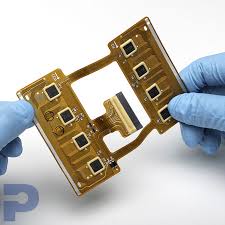
How does a flex circuit manufacturer ensure flexibility?
The layering process in flex circuit manufacturer also contributes to flexibility. Flex circuits can be single-sided, double-sided, or multi-layered, depending on the complexity of the design. For multi-layer circuits, the materials between the layers must be flexible enough to maintain the circuit’s ability to bend. While multi-layer designs add complexity and increase the strength of the circuit, they still must be made with flexible materials to ensure the final product can withstand repeated flexing. The use of flexible insulating layers, such as polyimide films, between conductive layers is a common practice that allows the circuit to remain pliable and functional.
Fabrication techniques are another key factor in ensuring flexibility. The process of photo-etching, where a circuit pattern is transferred onto the substrate and then etched away to create conductive traces, must be done precisely to maintain the desired flexibility. If the copper traces are too thick or if there are imperfections in the etching process, the circuit may become brittle and prone to cracking during flexing. Manufacturers use advanced techniques, such as laser cutting and precision etching, to ensure the copper traces are thin, clean, and evenly applied. This careful attention to detail helps prevent areas of stress concentration, which could lead to failure under bending conditions.
Finally, testing and quality control play an essential role in ensuring the flexibility of a flex circuit. Manufacturers perform a range of tests, including mechanical stress tests such as flexing, bending, and torsion, to assess the circuit’s ability to withstand movement over time. Thermal cycling tests are also conducted to simulate temperature changes, as temperature extremes can affect the circuit’s flexibility and performance. If any circuit fails during testing, adjustments are made to the material choice, design, or manufacturing process to ensure the circuit can withstand the intended mechanical stress.
In conclusion, a flex circuit manufacturer ensures flexibility by choosing the right materials, designing with stress distribution in mind, using precise fabrication techniques, and performing rigorous testing. By addressing each of these factors, manufacturers create flex circuits that are not only electrically efficient but also capable of withstanding the mechanical stresses of bending, twisting, and movement without compromising their integrity or functionality. This combination of thoughtful design and advanced technology is what makes flex circuits an ideal choice for modern, compact electronic devices.