
 admin
adminEnsure Proper Cleaning of a Flex Circuit Manufacturer
The flex circuit manufacturing process has many steps and requires a lot of human interaction. This is a large factor in why they cost more than rigid PCBs. Nevertheless, they can be a very economical choice when you need to make a board that must fit in an unusual space or is likely to be bent. Moreover, they can also help reduce the weight of a product by eliminating cabling and connectors.
Flex circuits can be used in a variety of industries, from consumer electronics to aerospace applications. These are made from a flexible polyimide substrate with copper traces that are bonded to the dielectric layer. They can be single- or double-sided and have copper plated through holes for connection to other components.
These circuits are designed for dynamic operation and can handle a large amount of bending without deterioration or failure. They are often used in devices such as mobile phones, digital cameras and portable DVD players, or in automotive products, where they may be exposed to harsh environments including heat, moisture, chemicals and shock.
To achieve this, the copper foil is subjected to a special annealing process that elongates the grain structure and makes it much more flexible. In addition, the material is laminated to an additional insulator layer to prevent shorts and other defects.
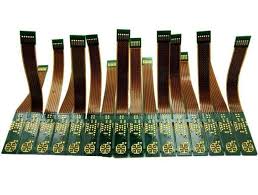
How to Ensure Proper Cleaning of a Flex Circuit Manufacturer
This is followed by a mask pattern that exposes and develops the areas for copper deposition and chemical etching. The through-holes are plated using the same methods as for rigid PCBs. The flex circuits are then cut to the desired length, and any unused copper is removed by chemical stripping.
The remaining copper is then bonded to the insulator with an epoxy or acrylic adhesive. This is then laminated to a substrate of either polyimide or FR-4 style materials, and the component mounting holes are drilled through the conductive layers. Then, the traces are created on both sides of the polyimide substrate with laser imaging or photo-imaging and are connected to the component mounting holes using through-hole plating.
In order to reduce stress on the traces, it is advisable to use large curved bends instead of sharp angles. Conductors traversing a bend area should be perpendicular to the overall bend axis. Also, it is helpful to stagger the traces. This ensures that there is sufficient space for them to flex during use and reduces the risk of them snapping during a sudden bending movement.
Some flex circuit manufacturer require stiffeners which are rigid parts of the board placed in selected places to provide additional mechanical support. These can be a combination of FR-4 or metal (not specified in the PCBWay video). These are often needed where the flex circuit needs to be bent repeatedly or in high-stress applications such as automotive and aerospace devices. They can also be useful in preventing the circuit from chafing or rubbing against itself during use, ensuring longevity and stability. However, these are often not required for most low-cost flex circuits.